 ENG
ENG
 INA
INA
Experience in Launching the "Hap Onigiri" Culinary Business through the Udayana Independent WMK Program
By: Mochammad Legrand Alvin Dermawan
Studying in the Japanese Literature Study Program at the Faculty of Humanities, Udayana University, is usually associated with thick dictionaries, kanji analysis, or literary reviews. However, for me, university life is a wide-open space to explore my potential. This opportunity came when I decided to step out of my academic comfort zone and join the Independent Merdeka Belajar Kampus Merdeka (MBKM) Program, specifically the Udayana Independent Entrepreneurial Merdeka (WMK) Program for the 2025/2026 Academic Year.
Through this program, I did not only learn classroom theories but was also directly involved in the actual dynamics of the business world. I consider this a strategic step to develop creativity, increase competitiveness, and expand professional networks in the real industry.
The Independent MBKM Entrepreneurial Merdeka program that I participated in divided the learning process into two main locations. For in-depth theoretical learning and experiential-based briefings, all activities were centered within the internal environment of Udayana University, Denpasar.
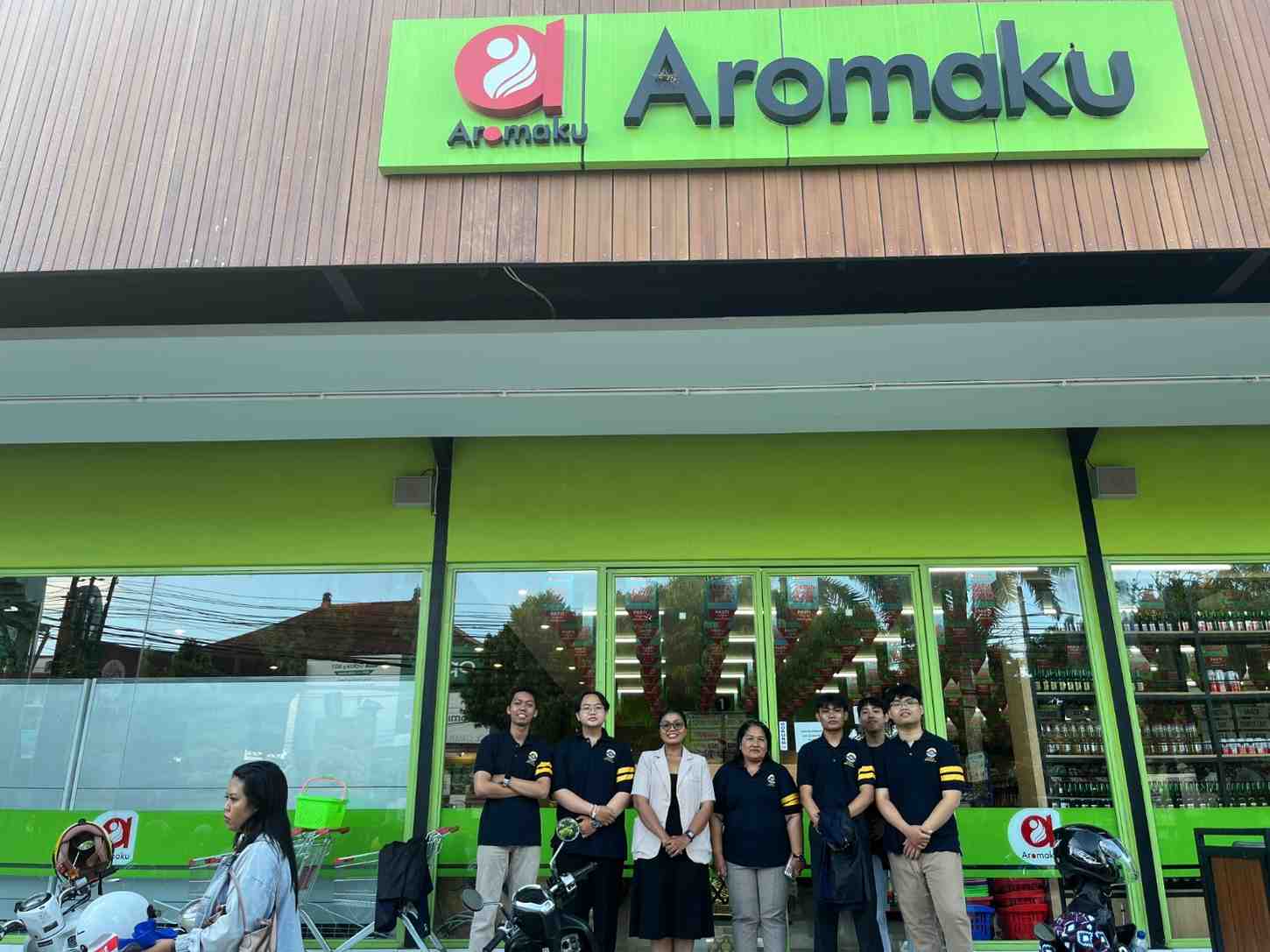
Meanwhile, to practice direct business operations, I was placed with an external partner, PT Aromakue Investaniaga Bersama, headquartered in Gianyar Regency, Bali. Led by Mrs. Luh Ketut Alit Andriyani, PT Aromakue is a retail company engaged in selling baking ingredients, bakery equipment, and managing minimarkets and supermarkets with an extensive branch network in Bali. The opportunity to learn directly within an established industrial ecosystem provided me with a deep understanding of supply chain management and professional customer service standards.
Over the course of 18 weeks, my activities were packed with a tight and challenging schedule. We followed self-directed online learning materials (asynchronous) through the OASE platform. I remember how the material delivered by Mr. Deka Isnadi opened my insights into the importance of persuasive copywriting—a writing skill to convince investors and attract consumers using the power of words, the scarcity principle, and an effective Call to Action.
My problem-solving skills were also tested when learning Root Cause Analysis with Mrs. Riri Hapsari. In this session, I learned to dissect the root causes of operational issues using Kaoru Ishikawa's Fishbone Analysis technique, which categorizes them into aspects of humans, machines, methods, materials, measuring tools, and the environment. Additionally, materials regarding transformational leadership, work agility (Agile Ways of Working using Sprint Planning and Retrospective systems), and technical presentation design skills further broadened my knowledge.
As the final result of this series of theories, my group and I designed an innovative culinary business idea called "Onigiri Nusantara", which was launched under the trademark "Hap Onigiri". Inspired by my background in Japanese Literature, we tried to combine the practicality of Japanese rice balls with local Indonesian flavors. We modified the onigiri using various traditional fillings, such as Balinese Ayam Betutu, Teri Cabe Ijo, Ayam Daun Jeruk, and Tempe Orek. We conceptualized this business as a practical, delicious, and filling food solution for people with high mobility in Denpasar City, especially for students and workers.
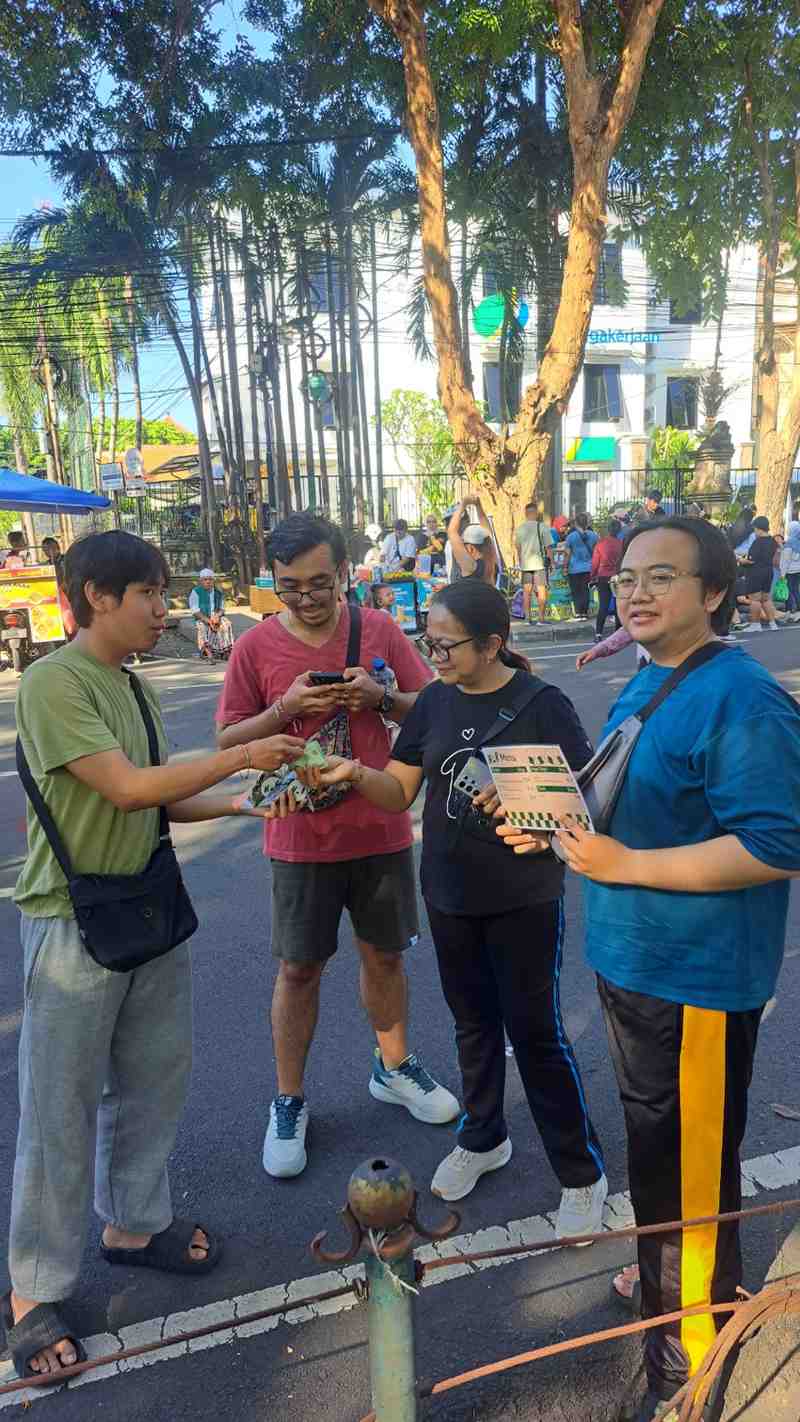
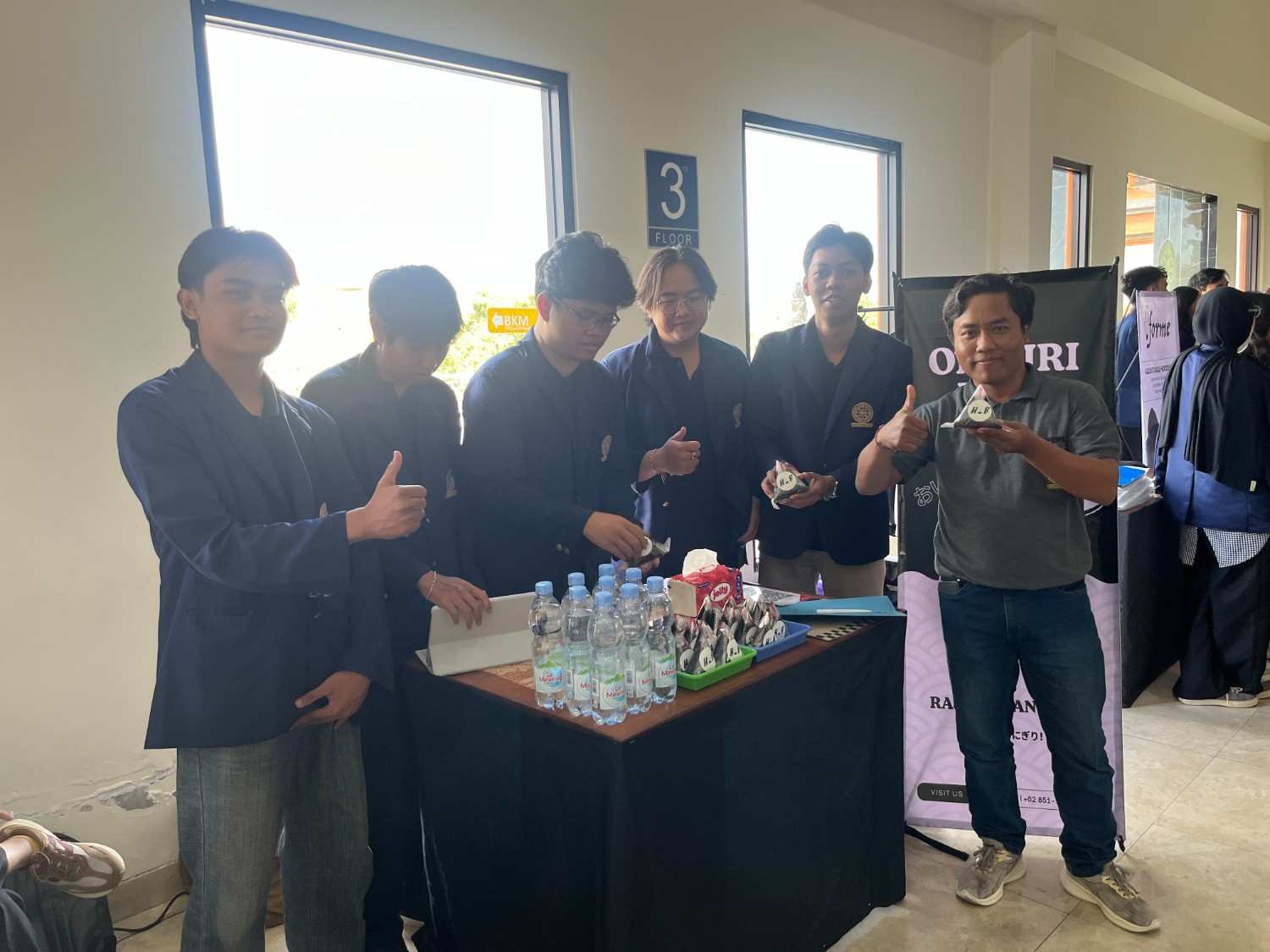
We started our operational process from a challenging initial stage, including recipe trials, flavor refinement, selecting raw materials in the market, and creating clean, appealing packaging. We also developed digital marketing strategies and conducted direct selling around the campus and boarding house areas. The most memorable moment for me was when our "Hap Onigiri" product successfully passed selection to be exhibited in the Entrepreneur Hub event organized by the Ministry of Cooperatives and SMEs of the Republic of Indonesia, and was also presented before the Field Supervisor (DPL) and the university examination team.
Personally, I gained many benefits from participating in this Independent MBKM program. First, I felt a significant increase in practical skills (hard skills) in managing business operational workflows and maintaining product quality. Second, I gained real experience in problem-solving when facing operational challenges in the field.
Third, my managerial and communication skills became sharper through the application of an adaptive business strategy. Furthermore, my professional network expanded as I was able to build relationships with retail industry players, experienced business mentors, and fellow student entrepreneurs. All of these experiences have made my mental readiness more mature to face competition in the working world or when starting an independent business in the future.
Participating in the Udayana University Independent Entrepreneurial Merdeka program has been one of the best decisions of my college years. This program proves that literature students have the same opportunities and capabilities to become resilient entrepreneurs. The ups and downs of perfecting the product flavor, calculating unit costs, and dealing with exhaustion with the team while preparing for the exhibition were valuable moments that shaped my mindset to become more independent. I am very grateful to the MBKM committee, supervisors, and partners who have guided me along the way.
For the future implementation of the program, I hope the learning platform management can ensure all material modules are uploaded sequentially and completely so that the student learning process is more convenient. Meanwhile, for my fellow students, do not be afraid to step out of your comfort zone. The MBKM program is an excellent platform for learning. A good innovation is often born from the courage to combine the knowledge you have with real needs in society. If I can combine Japanese Literature with Indonesian flavors into a business opportunity, you can certainly create other innovations as well
Gallery
UDAYANA UNIVERSITY