 ENG
ENG
 INA
INA
Exploring European Culture Through a Virtual Space: A Comprehensive MBKM Student Exchange Experience at Universitas Indonesia
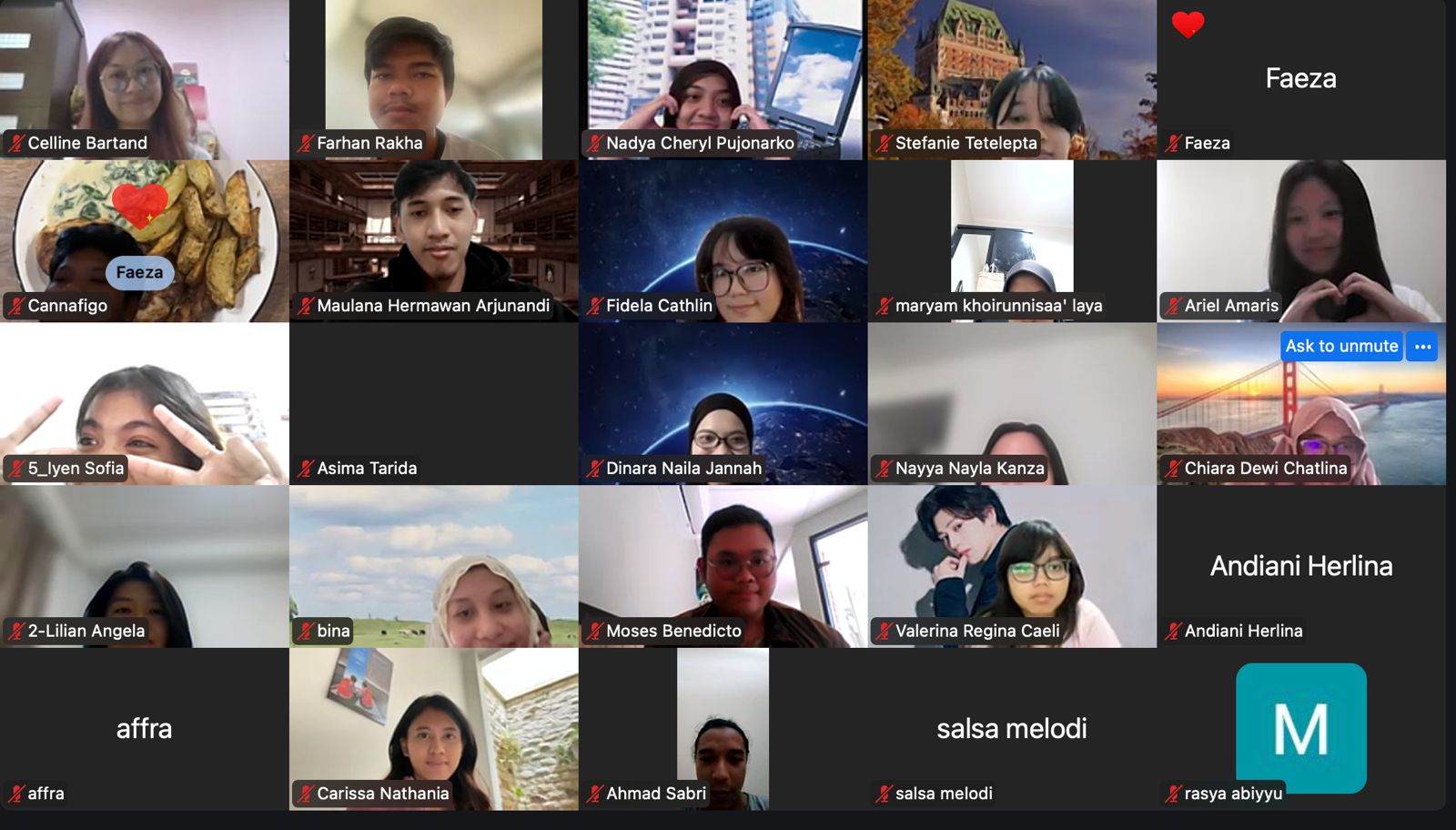
Hello everyone! Let me introduce myself, I am Maulana Hermawan Arjunandi, a student of the Japanese Literature Study Program at the Faculty of Humanities, Universitas Udayana. On this occasion, I would like to share my valuable experiences while participating in the Merdeka Belajar Kampus Merdeka (MBKM) program.
The MBKM program has opened incredible opportunities for students across Indonesia to broaden their academic horizons far beyond the boundaries of their home study programs. This semester, I had the privilege of participating in the MBKM Student Exchange program at the Faculty of Humanities, Universitas Indonesia (UI). This exchange program was held entirely through a Distance Learning scheme, presenting both challenges and invaluable digital adaptation experiences.
Description of Activities During the Program:
During my one semester at Universitas Indonesia, I decided to take a bold step by studying disciplines outside the East Asian sphere. I took six courses focusing on the linguistics and culture of European civilization. These six courses included French Ethnicity, Basic French, Basic Spanish, Basic Russian, Italian Culture, and Greek Mythology.
All academic activities were conducted interactively through video conferencing platforms (synchronous) and the EMAS UI learning management system (asynchronous). In the foreign language classes, the learning process was heavily focused on mastering basic grammar and phonetic accuracy. For instance, in the Basic Spanish class, I was trained intensively to understand the precision of translating daily contexts. Time expressions such as 12:45 are not merely translated literally but are grammatically understood as menos cuarto (a quarter to) the next hour. Meanwhile, in the Russian Language class, I faced the challenge of mastering the entirely new Cyrillic alphabet.
On the other hand, cultural studies classes such as French Ethnicity, Italian Culture, and Greek Mythology required me to read a vast amount of historical literature. We routinely dissected classical epics, examined Renaissance history, and engaged in critical discussions in virtual breakout rooms about how the history of Western civilization shaped the mindset of modern European societies.
Benefits Obtained:
The benefits I gained from this cross-disciplinary program were massive and had a direct impact on my main focus of study in Japanese Literature. Academically, the etymological insights from the Greek Mythology class and the mastery of basic Indo-European linguistics provided a very solid methodological framework for the preparation of my thesis research. My current research focuses on the semantic analysis of medical and biological terminology in the animated series Hataraku Saibou. Considering that many global medical terms and loanwords in Japanese (gairaigo) are rooted in Latin and Ancient Greek, the knowledge from these UI classes has made my semantic meaning dissection process much sharper, more comprehensive, and theoretically grounded.
In addition to academic benefits, the distance learning scheme trained my mental resilience. Digital literacy skills, discipline in independent time management, and cross-cultural communication skills within a virtual ecosystem became non-academic skills (soft skills) that developed rapidly during my participation in this program.
Personal Impressions and Messages:
Attending online lectures from morning to afternoon, especially with the demand to learn three new foreign languages simultaneously, certainly created a high cognitive load. However, the exhaustion was highly rewarding compared to the wealth of knowledge and new perspectives I acquired. I feel profoundly grateful and proud to have experienced the academic atmosphere standards of Universitas Indonesia with highly interactive and supportive lecturers.
My message to my fellow students and juniors in Japanese Literature is this, never hesitate to step out of your comfort zone. Take cross-disciplinary courses if the opportunity arises. Studying the culture and language of another part of the world will not make us lose focus on our main field of study, but rather it will enrich our analytical tools in understanding literary works and linguistic phenomena comparatively on a global scale.
Gallery
UDAYANA UNIVERSITY