 ENG
ENG
 INA
INA
Stepping Out of My Comfort Zone: My Journey in Developing a Culinary Business through the Udayana University Independent Entrepreneurship Program
By: Ida Bagus Krishna Nayottama
As a student of the Japanese Literature Study Program, Faculty of Humanities, Udayana University, my daily life is usually filled with academic activities such as studying kanji, translating Japanese texts, and analyzing literary works. However, I believe that university is not only a place to gain knowledge in the classroom but also a space to explore and develop one's potential. This belief encouraged me to participate in the Independent Merdeka Belajar Kampus Merdeka (MBKM) Program, specifically the Independent Entrepreneurship Program (Wirausaha Merdeka/WMK) at Udayana University for the 2025/2026 Academic Year.
Participating in this program provided me with a unique learning experience. I not only studied entrepreneurship concepts in theory but also had the opportunity to experience the realities of running a business firsthand. This experience helped me enhance my creativity, strengthen my entrepreneurial skills, and expand my professional network with industry practitioners.
The Independent Entrepreneurship Program consisted of two main learning components. The theoretical sessions and preparatory training were conducted at Udayana University using an experiential learning approach, while the practical internship was carried out with an industry partner, PT Aromakue Investaniaga Bersama, located in Gianyar Regency, Bali.
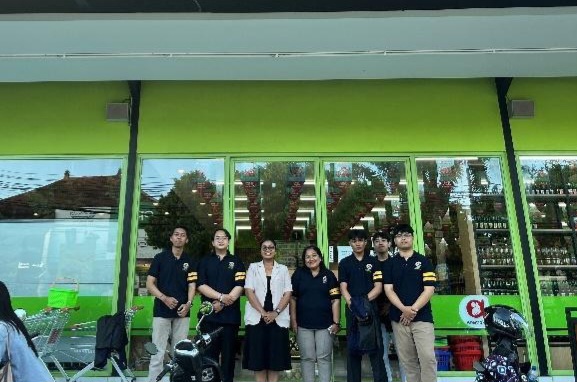
PT Aromakue Investaniaga Bersama, led by Mrs. Luh Ketut Alit Andriyani, is a retail company specializing in baking ingredients, bakery supplies, as well as the management of minimarkets and supermarkets with multiple branches across Bali. Through this internship, I gained valuable insights into business management, ranging from daily operations and supply chain management to the importance of delivering excellent customer service.
For approximately 18 weeks, I participated in a series of intensive learning activities. In addition to field practice, we completed self-paced learning through the OASE platform. One of the most memorable topics was persuasive copywriting, delivered by Mr. Deka Isnadi. Through this course, I learned how to create compelling written content that attracts customers and investors by choosing effective words, applying the principle of scarcity, and incorporating strong calls to action.
Another valuable learning experience was studying problem-solving techniques through the Root Cause Analysis method under the guidance of Mrs. Riri Hapsari. This course taught us how to identify the root causes of operational problems using Kaoru Ishikawa's Fishbone Analysis, which examines factors such as people, methods, machines, materials, measurements, and the environment. In addition, I learned about transformational leadership, Agile ways of working through Sprint Planning and Retrospectives, and practical presentation design techniques using various supporting tools.
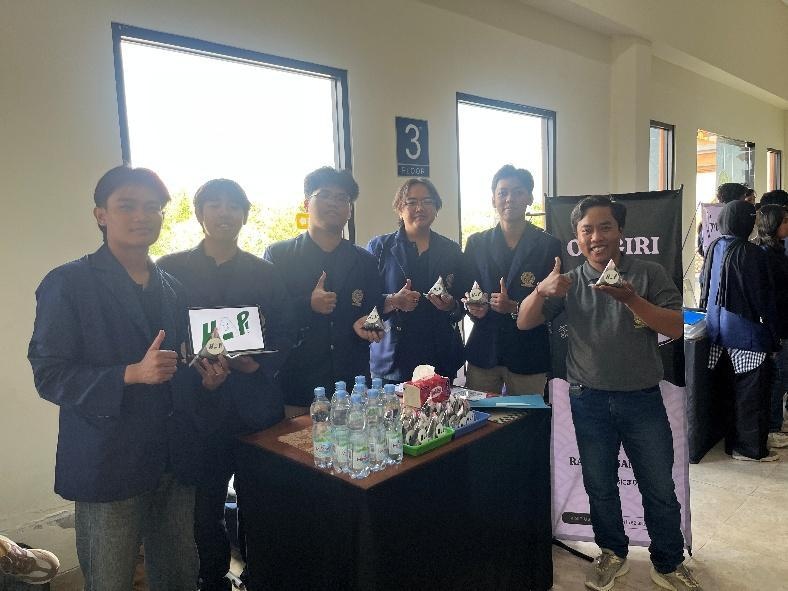
All of these lessons were eventually applied to a business project developed by my team: Hap Onigiri, an innovative culinary product. Inspired by my background in Japanese Literature, we combined the concept of traditional Japanese onigiri with authentic Indonesian flavors. As a result, we created several unique fillings, including Balinese Betutu Chicken, Green Chili Anchovies, Kaffir Lime Chicken, and Sweet Stir-fried Tempeh. We designed Hap Onigiri as a practical, delicious, and satisfying meal for people with busy lifestyles, particularly university students and office workers in Denpasar.
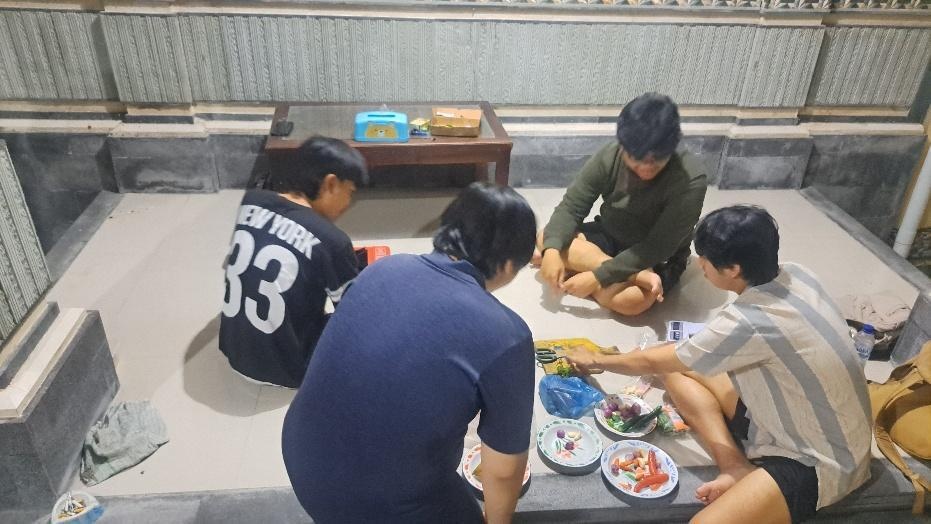
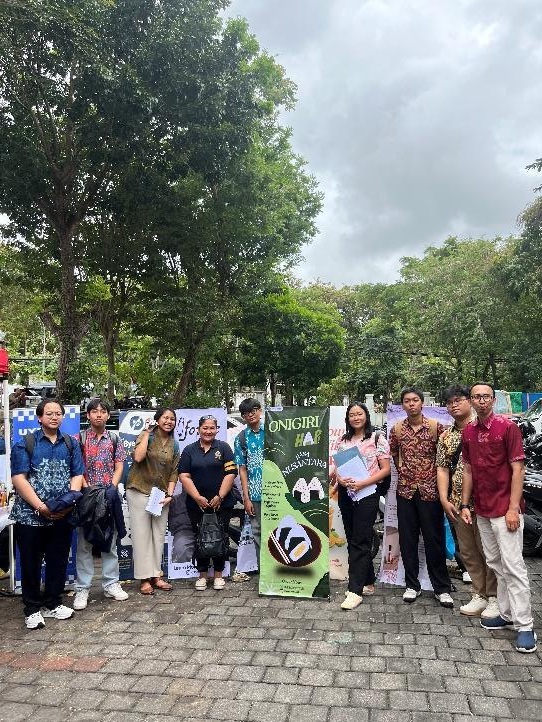
Developing the business was both exciting and challenging. We began with recipe testing, flavor refinement, ingredient selection, and packaging design to ensure both hygiene and visual appeal. We also developed digital marketing strategies and conducted direct selling around university campuses and student residences. One of our proudest achievements was being selected to showcase Hap Onigiri at the Entrepreneur Hub organized by the Ministry of Cooperatives and Small and Medium Enterprises of the Republic of Indonesia. We also had the opportunity to present our business project before our field supervisors and the evaluation panel at Udayana University.
This program brought me numerous benefits, both academically and personally. I significantly improved my technical skills in managing business operations, maintaining product quality, and understanding the overall business process. Moreover, I learned how to solve real operational challenges, which strengthened my problem-solving abilities through practical experience.
Beyond technical skills, my communication, leadership, and teamwork abilities also improved considerably. The program allowed me to connect with business mentors, industry professionals, and fellow student entrepreneurs who shared similar interests. These experiences have become valuable assets in preparing me for my future career and entrepreneurial journey.
For me, participating in the Udayana University Independent Entrepreneurship Program has been one of the most rewarding experiences of my university life. It demonstrated that students from any academic discipline—including Japanese Literature—have equal opportunities to become successful entrepreneurs. Every challenge we faced, from perfecting our product and calculating production costs to preparing for exhibitions as a team, helped shape me into a more independent, resilient, and responsible individual. I am sincerely grateful to the MBKM organizing committee, my academic supervisors, and our industry partner for providing such an invaluable learning experience.
As a suggestion for future implementations of the program, I hope the learning management team will ensure that all learning materials are uploaded in a complete and well-organized manner so that students can enjoy a smoother learning experience. For fellow students who are still hesitant to join the MBKM Program, I encourage you not to be afraid of stepping outside your comfort zone. This program offers an excellent opportunity to develop skills beyond the classroom. I firmly believe that the best innovations are born when we combine our academic knowledge with real societal needs. My experience in developing Hap Onigiri proves that even a background in Japanese Literature can inspire a business idea with meaningful value and promising potential.
Gallery
UDAYANA UNIVERSITY